Skip to Main Content
  • Home
  • News
  • About
  • Members
    • AEBR / Association of European Border Regions
    • OLZA / Association of Development and Regional Co-operation
    • CUAS / Carinthia University of Applied Sciences
    • CCBC / Centre For Cross Border Cooperation
    • Euro-Institut
    • Fontys University of Applied Sciences
    • IEP / University of Strasbourg
    • IFD / Institute of Borders and Discontinuities
    • ITEM – University of Maastricht
    • LUPS-CESCI Research Group of Cross-Border Cooperation
    • MOT / Mission Opérationnelle Transfrontalière
    • UniGR – Center for Border Studies
    • USMB / Université Savoie Mont Blanc
    • University of Girona
    • University of Ljubljana – Faculty of Public Administration
    • University of Udine
    • WSB University
  • Projects
    • Borders in Globalization 2 (BIG2) – 21st Century Borders
    • Castle talks – European crises and border regions
    • FRONTEM: Frontiers in Motion: Which Models for the EU?
    • MOOC on European Territorial Cooperation
    • TEIN4citizens
      • 1st Event: What Does it Mean to be an EU Citizen
      • 2nd Event: Old and New Minorities in Europe
      • 3rd Event: Twin Cities & Civil Society
      • 4th Event: Multilingualism & Identity in Europe
      • 5th Event: Borders & the Future of Europe
      • (Re-)Bordering Europe? Views and Voices of Citizens and Non-Citizens
    • Archives
      • Castle Talks – Conflicts and cooperation at EU Borders
      • Interdisciplinary research on cross borders/territorial cooperation
      • LEONARDO Partnership Meetings 2010-2012
      • LEONARDO Transfer of Innovation 2012-2014
      • Microstates, diplomacy and cooperation
      • TEIN Platform for cross-border dialogue
  • Tools
    • PAT-TEIN – Toolkit for Inter-Cultural / Cross-Border Project Management
      • Toolkit Austria/Italy/Slovenia
      • Toolkit France/Spain
      • Toolkit Czech Republic/Poland
      • Toolkit Ireland/Northern Ireland
    • Impact Assessment Toolkit
    • Toolkit on Models of Border Management and Perception in the EU
    • Video Resources
  • Publications
  • Annual Conferences
    • 2025: Beyond Borders. Culture, Language, and Identity in European Integration
    • 2024: The Future Of Cross-border Cooperation And Mobility: Horizontal Integration And Beyond
    • 2023: Contesting 21st Century B/Orders
    • Other conferences
      • 2025: International Conference “What Future for the Concept of Borderless Europe?”
      • 2024: Research Seminar “Resilience and Intercultural Cooperation”
    • Archives
      • 2022: Borders In Flux and Border Temporalities In and Beyond Europe
      • 2021: Territorial and Inter-Organizational Cooperation
      • 2020: The effects of the COVID 19 crisis on the cross-border cooperation between France, Spain and Andorra
      • 2019: Assessing Impact Across Borders
  • Contacts
Transfrontier Euro-Institut Network

Transfrontier
Euro-Institut Network

  • Social Icon
  • Home
  • News
  • About
  • Members
        • AEBR / Association of European Border Regions
        • CCBC / Centre For Cross Border Cooperation
        • CUAS / Carinthia University of Applied Sciences
        • Euro-Institut
        • Fontys University of Applied Sciences
        • IEP / University of Strasbourg
        • IFD / Institute of Borders and Discontinuities
        • ITEM – University of Maastricht
        • LUPS-CESCI Research Group of Cross-Border Cooperation
        • MOT / Mission Opérationnelle Transfrontalière
        • OLZA / Association of Development and Regional Co-operation
        • UniGR – Center for Border Studies
        • University of Girona
        • University of Ljubljana – Faculty of Public Administration
        • University of Udine
        • USMB / Université Savoie Mont Blanc
        • WSB University
  • Projects
    • Borders in Globalization 2 (BIG2) – 21st Century Borders
    • Castle talks – European crises and border regions
    • FRONTEM: Frontiers in Motion: Which Models for the EU?
    • MOOC on European Territorial Cooperation
    • TEIN4citizens
      • 1st Event: What Does it Mean to be an EU Citizen
      • 2nd Event: Old and New Minorities in Europe
      • 3rd Event: Twin Cities & Civil Society
      • 4th Event: Multilingualism & Identity in Europe
      • 5th Event: Borders & the Future of Europe
      • (Re-)Bordering Europe? Views and Voices of Citizens and Non-Citizens
    • Archives
      • Castle Talks – Conflicts and cooperation at EU Borders
      • Interdisciplinary research on cross borders/territorial cooperation
      • LEONARDO Partnership Meetings 2010-2012
      • LEONARDO Transfer of Innovation 2012-2014
      • Microstates, diplomacy and cooperation
      • TEIN Platform for cross-border dialogue
  • Tools
    • PAT-TEIN – Toolkit for Inter-Cultural / Cross-Border Project Management
      • Toolkit Austria/Italy/Slovenia
      • Toolkit France/Spain
      • Toolkit Czech Republic/Poland
      • Toolkit Ireland/Northern Ireland
    • Impact Assessment Toolkit
    • Toolkit on Models of Border Management and Perception in the EU
    • Video Resources
  • Publications
  • Annual Conferences
    • 2025: Beyond Borders. Culture, Language, and Identity in European Integration
    • 2024: The Future Of Cross-border Cooperation And Mobility: Horizontal Integration And Beyond
    • 2023: Contesting 21st Century B/Orders
    • Other conferences
      • 2025: International Conference “What Future for the Concept of Borderless Europe?”
      • 2024: Research Seminar “Resilience and Intercultural Cooperation”
    • Archives
      • 2022: Borders In Flux and Border Temporalities In and Beyond Europe
      • 2021: Territorial and Inter-Organizational Cooperation
      • 2020: The effects of the COVID 19 crisis on the cross-border cooperation between France, Spain and Andorra
      • 2019: Assessing Impact Across Borders
  • Contacts
  • 1st Event: What does it mean to be an EU citizen?


    Human Rights, Civic Rights, Entitlements and Obligations

    Monday 11th March 2019
    9.30am – 4.30pm – Belfast

    Since the publication of the EU Commission’s ‘White paper’ in March 2017, reflections on the future of Europe have taken a growing place on the European and national political agendas. Euroscepticism and rising populism reveal the urgent need to engage civil society in this debate and this is particularly true in border regions. Despite conflictual past experiences, cross-border flows and intercultural engagement have become a part of many citizens’ everyday life. Nevertheless, these regions have not been spared by the rise of populism and the growth of Euroscepticism.

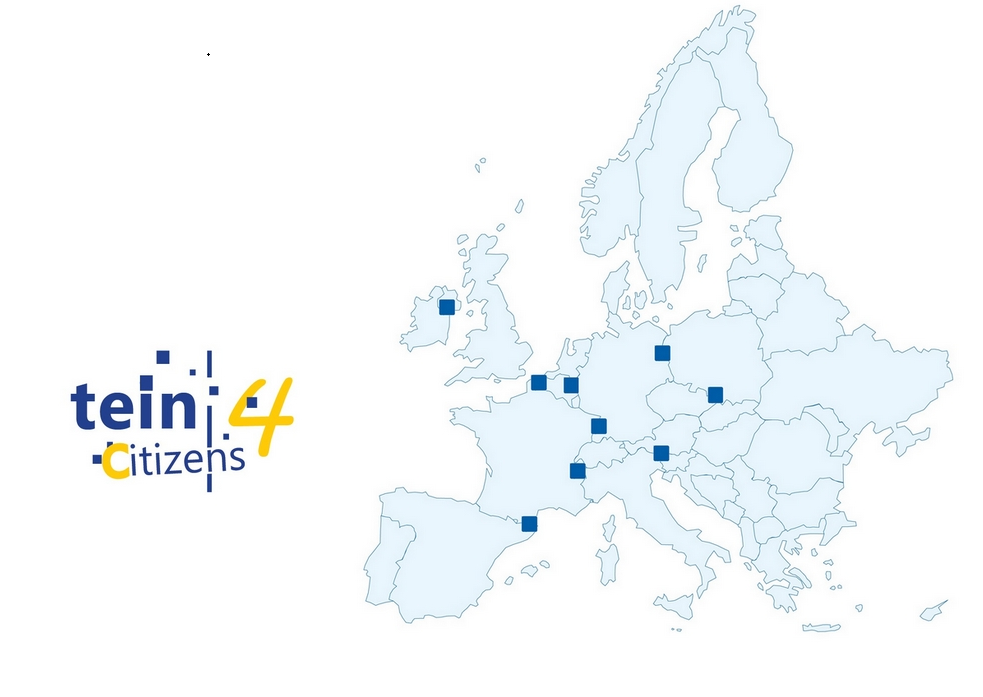
    This event is part of a Transfrontier Euro Institut Network (TEIN) project – Engaging civil society in border regions for the future of Europe – funded by the EU Europe for Citizens programme. TEIN formed in 2010, now brings together 15 partners from 9 border regions in Europe. Its partners are universities, research institutes and training centres which are dedicated to the practical business of cross-border cooperation in Europe, all with deep knowledge of their borders’ specificities. The Centre for Cross Border Studies is a founder partner of the TEIN.

    This event is the first in a series of five one-day forums, each held in a different border region* and including both a European as well as local dimension. The five seminars will address topics related to the future European political agenda; encouraging citizens to debate their ideas, fears and suggestions for the future of Europe. Participants will be invited to reflect on how they profit from the EU, which aspects need to be improved from their point of view and what they would like to change.
  • Access Audio Record & Short reports

    Please click here to access all the audio records of the presentations

    Please click here to access the short report of the results of the forum in English

    Please click here to access the short report of the results of the forum in German

    Please click here to access the short report of the results of the forum in French

    Please click here to access the short report of the results of the forum in Polish

    Please click here to access the short report of the results of the forum in Czech

    Please click here to access the short report of the results of the forum in Catalan

    Please click here to access the short report of the results of the forum in Spanish

    Please click here to access the short report of the results of the forum in Slovene

  • Summary of the forum as a video

    To gain a quick overview on the forum and its debates, take to look on this video in which you will find an explanation of the situation on the Irish-Northern-Irish Border and an interview with Anthony Soares from the Centre for Cross Border Studies who organised this forum!


  • Interesting survey results

    We got 221 answers to our survey on « What does it mean to be an EU-citizen? » from 15 different countries.

    85% of the respondents come from border regions.

    Below, you will find the evaluation of the questions we asked:

Scroll to

  • 1st Event: What does it mean to be an EU citizen?
  • Access Audio Record & Short reports
  • Summary of the forum as a video
  • Interesting survey results
  • © 2020 Transfrontier Euro-Institut Network
  • |
  • Privacy Policy
  • |
  • Created by WebsiteNI
We use cookies on our website to give you the most relevant experience by remembering your preferences and repeat visits. By clicking “Accept All”, you consent to the use of ALL the cookies. However, you may visit "Cookie Settings" to provide a controlled consent.
Cookie SettingsAccept All
Manage consent

Privacy Overview

This website uses cookies to improve your experience while you navigate through the website. Out of these, the cookies that are categorized as necessary are stored on your browser as they are essential for the working of basic functionalities of the website. We also use third-party cookies that help us analyze and understand how you use this website. These cookies will be stored in your browser only with your consent. You also have the option to opt-out of these cookies. But opting out of some of these cookies may affect your browsing experience.
Necessary
Toujours activé
Necessary cookies are absolutely essential for the website to function properly. These cookies ensure basic functionalities and security features of the website, anonymously.
CookieDuréeDescription
cookielawinfo-checkbox-analytics11 monthsThis cookie is set by GDPR Cookie Consent plugin. The cookie is used to store the user consent for the cookies in the category "Analytics".
cookielawinfo-checkbox-functional11 monthsThe cookie is set by GDPR cookie consent to record the user consent for the cookies in the category "Functional".
cookielawinfo-checkbox-necessary11 monthsThis cookie is set by GDPR Cookie Consent plugin. The cookies is used to store the user consent for the cookies in the category "Necessary".
cookielawinfo-checkbox-others11 monthsThis cookie is set by GDPR Cookie Consent plugin. The cookie is used to store the user consent for the cookies in the category "Other.
cookielawinfo-checkbox-performance11 monthsThis cookie is set by GDPR Cookie Consent plugin. The cookie is used to store the user consent for the cookies in the category "Performance".
viewed_cookie_policy11 monthsThe cookie is set by the GDPR Cookie Consent plugin and is used to store whether or not user has consented to the use of cookies. It does not store any personal data.
Functional
Functional cookies help to perform certain functionalities like sharing the content of the website on social media platforms, collect feedbacks, and other third-party features.
Performance
Performance cookies are used to understand and analyze the key performance indexes of the website which helps in delivering a better user experience for the visitors.
Analytics
Analytical cookies are used to understand how visitors interact with the website. These cookies help provide information on metrics the number of visitors, bounce rate, traffic source, etc.
Advertisement
Advertisement cookies are used to provide visitors with relevant ads and marketing campaigns. These cookies track visitors across websites and collect information to provide customized ads.
Others
Other uncategorized cookies are those that are being analyzed and have not been classified into a category as yet.
Enregistrer & appliquer